
You probably know Owlerton Stadium as the home of greyhound racing and a top night out with food, drink and live music entertainment, all under one roof. But do you know the rich history of Owlerton Stadium? Standing as a proud symbol of Yorkshire’s racing heritage since its construction in 1929, this purpose-built speedway and greyhound racing venue has been a hub of excitement and evolution. From its industrial beginnings surrounded by steelworks to its modern-day status as a thriving entertainment venue, Owlerton has a story steeped in community, sport and innovation.
Quick Links
The Birth of a Sporting Landmark
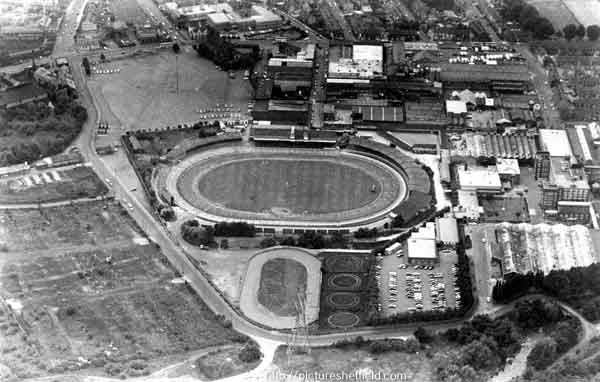
Construction on a 20-acre site in Owlerton (near Hillsborough, Sheffield) began in 1929, and the stadium was built in a heavily industrialised area surrounded by steel forges. Initially designed for speedway, it opened in March 1929. Within a few years, the site was adapted for greyhound racing: stands were modified, and greyhound racing officially began in January 1932.
The first ever speedway meeting took place on 30 March 1929, marking the beginning of Owlerton’s long and dynamic sporting journey. Just three years later, on 12 January 1932, the venue held its official greyhound racing opening night, drawing a crowd of 10,000 eager spectators. The event was a triumph, with the local press marvelling at the stadium’s mechanical totalisator – a ‘mechanical and electrical marvel’ that could register bets in fractions of a second. The first race – the Oxford Stakes over 525 yards – was won by Carbrook Ted, who stormed home in 33.63 seconds.
Pre-War Racing and the Rise of Owlerton
By the 1930s, Sheffield had become a hotbed for greyhound racing, with Owlerton quickly establishing itself as the city’s premier licensed venue. Operated by Sheffield Sports Stadium Ltd, the track featured a 472-yard circumference and multiple race distances ranging from 300 to 700 yards. Spectators could enjoy excellent viewing from the grandstand and adjacent parade ring, where greyhounds were showcased before each race.
Behind the scenes, legendary figures began to shape the stadium’s growing reputation. Sam Vinter joined as Racing Manager, while Alf Morton, an esteemed breeder, supplied the track with top-tier greyhounds, including the champion, Victor Ben Hur. Trainers like Harry Bidwell and Ted Brennan became household names, helping Owlerton develop a strong and loyal following that would last for generations.
Post-War Glory and the Golden Era
During the Second World War, attendances remained strong, though open racing was limited due to travel restrictions. In the 1950s, the stadium entered a golden era. Ted Brennan became one of the North’s leading trainers, and in 1951 the track claimed the ‘News of the World Intertrack Championship’. In 1953, Jim Hookway joined as a resident trainer, and he, together with Brennan, helped cement the stadium’s reputation.
The 1960s were a period of transformation and triumph. When rival track Darnall Stadium closed, Owlerton became Sheffield’s sole licensed greyhound venue. The Sheffield Corporation purchased the stadium for £185,000, converting private clubs into public bars and investing heavily in improvements. Hookway, rewarded for his achievements, shared the title of Trainer of the Year in 1965, bolstered by the incredible performances of Clonmannon Flash, winner of both the Scottish Greyhound Derby and Edinburgh Cup.
The decade also witnessed the rise of one of the greatest litters in greyhound history, bred by Leo Stack in Ireland. The 1965 Crazy Parachute–Supreme Witch litter produced ‘Tric-Trac’ and ‘Spectre II’, who went on to claim first and second place in the 1967 English Greyhound Derby – both trained at Owlerton. Hookway’s second Trainer of the Year title soon followed, cementing the track’s elite status.

Modernisation and Challenges
By the 1970s, Owlerton introduced one of its most enduring competitions – the Steel City Cup – which remains a prestigious feature of the racing calendar. However, change was inevitable. The track switched from grass to an all-sand surface in 1978, modernising conditions for racers and improving consistency.
The 1980s brought challenges. Following the Hillsborough disaster in 1989, the government’s new safety regulations under the Taylor Report required costly stadium improvements. Unable to meet the financial demands immediately, the track closed temporarily – its first closure since 1932. It later reopened under new management, with sponsorship from Tennents, before the A & S Leisure Group acquired it in 1991, investing £3 million in a full refurbishment that revitalised the venue.
Owlerton in the 21st Century
Entering the new millennium, Owlerton continued to evolve. A major refurbishment in 2008 modernised its facilities, including the addition of a glass-fronted Panorama Restaurant seating 300 guests, executive suites, bars and fast-food outlets. Under the guidance of John Gilburn, a former Greyhound Racing Association manager, the stadium achieved new success – winning the Trainers’ Championship in both 2009 and 2014. The Three Steps to Victory competition, inaugurated in 2003, became a unique event in British greyhound racing, testing dogs across multiple distances.
In 2018, Owlerton signed a major media rights deal with ARC, increasing its race schedule to multiple weekly meetings. This partnership ensured that Sheffield’s greyhound racing would reach audiences nationwide. The following year saw the opening of a £6 million conference centre and executive suite close by, called OEC, further cementing Owlerton and the surrounding area as a destination for great venues and multifunctional events.
Continuous investment has kept the stadium thriving. In 2022, a £400,000 refurbishment included a complete track replacement, new running rails and upgraded drainage systems. And in 2024, Owlerton secured a five-year contract extension with ARC, ensuring racing will continue through 2025 and beyond. Recent track maintenance in July 2025 has kept the racing fast and flowing.
Where is the Best Greyhound Racing Today?
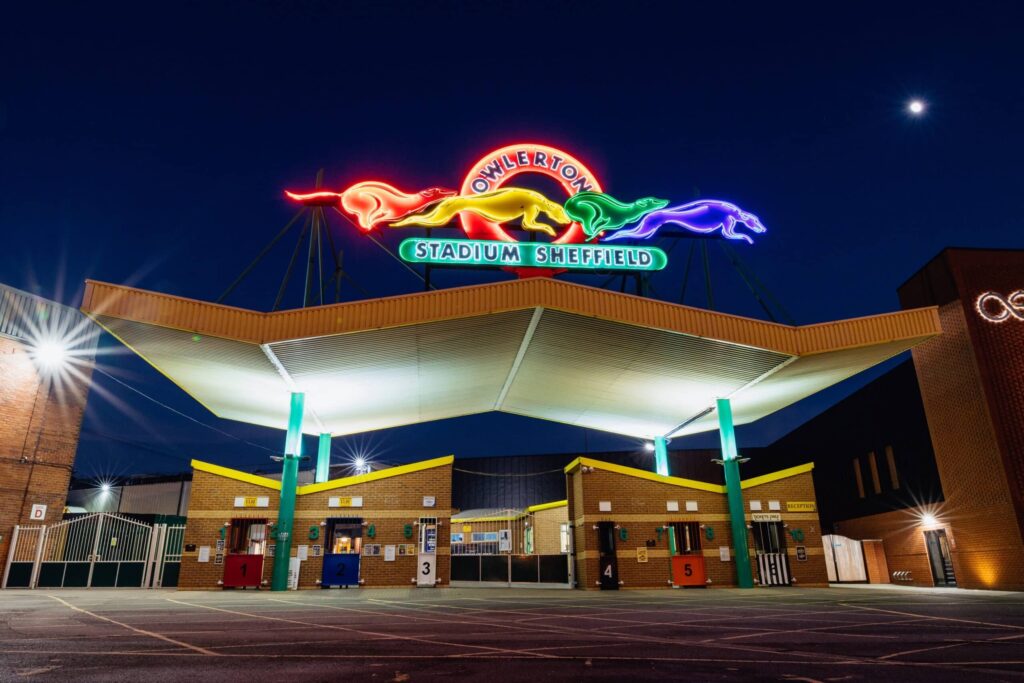
Today, Owlerton Stadium is far more than just a racetrack. It’s home to Sheffield Tigers Speedway and has even welcomed the Sheffield Eagles Rugby League team. With a capacity of 4,000 spectators, the stadium remains a cornerstone of Sheffield’s sporting community.
From its roaring crowds of the 1930s to its modern meetings, Owlerton has continually adapted to changing times while preserving its authentic sporting spirit. It stands as one of the UK’s oldest and most resilient greyhound stadiums – a living link between Sheffield’s industrial past and its vibrant present.
Nearly a century after its first race, Owlerton Greyhound Stadium remains a place where history, sport, and community come together under the floodlights – proof that true sporting traditions never fade. With so many great offers that are the ingredients for a first-class night out, Owlerton Stadium is a true iconic Sheffield gem.